Showing posts with label science. Show all posts

 Welcome back!


I hope you have all had an amazing week. As you may or may not be aware there is a cold snap sweeping across the Uk and parts of Europe if that is you make sure to keep warm! Let's start this weeks post. 


They are responsible for a whopping NZ$3.3 billion loss in productivity each year and listed as one of the biggest threats to marine and terrestrial biodiversity. They are the Invasive Species. In light of the economic and ecological destruction caused by these invaders, James Russell and New Zealand are taking a stand. Desperate times are calling for some desperate measures. They have called for a mass eradication of all invasive mammals by the year of 2050 to preserve endemic wildlife. Is this extreme? Or, is this necessary?  

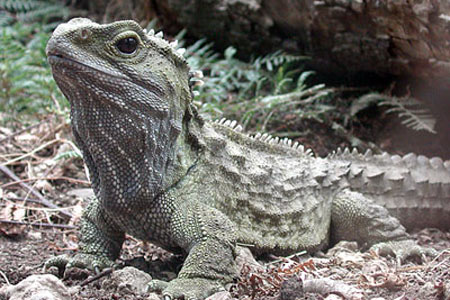
2015, marked the year where tourism became one of the most profitable industries above agriculture for New Zealand. This island boasts the last surviving species of Tuataras an order of reptiles that thrived in the age of the dinosaurs (top left). Not a reptile person? How about catching a glimpse of four species of Amphibians that are so ancient they have changed very little in the past 70 million years: the Pepeketua (bottom left). For those birdwatchers, the Island is known as the ‘seabird capital’ and home to the Kiwi! Truly a nature lovers paradise.

Invasive species pose a significant risk to this island’s biodiversity thereby posing a threat to their economy. In 2005 the IUCN found that over half of animal extinctions were caused by the presence of invasive species. New Zealand has already lost three of its endemic frog species due to the introduction of rats.  New Zealand aims to avoid further extinction by ordering an island-wide cull of invasive mammals. Take a look at the three invasive species that have earned the top three spots on New Zealand’s Hitlist!


The fight arrives in your own backyard… literally:


This extreme Conservation project will not be easy to carry out, the first issue arising is the sheer scale of this project.  Eradication projects such as this are not unheard of and actually boast high success rates but these have been on islands with an area of 128 square kilometres, New Zealand has a total area of 268,000 square kilometres.   

In addition to this, New Zealand’s dynamic landscape includes cities, forests and farms. Such differences in landscapes offer a multitude of safe havens for the top three on the island’s Hitlist. For this project to be successful, traps would have to be placed in people’s  back yards, as such the people of New Zealand must be behind this project 100% as anything less could lead to areas becoming refuges for invasive mammals. Turns out, the public is fully supportive of this mass cull. With support from the public, conservation groups and the government it seems the end of the line is near for New Zealand's Invasive mammals. Bad time to be a possum in New Zealand... or a rat... or a stoat.

Alright, so they have the support of the masses but how is the killing part going to carried out? After all, they are upscaling. The answer to that question is… they are not quite sure, there are a few methods in the pipeline such as:

Poisons: Always a good option when it comes to pest control. A common one being 1080 (sodium fluoroacetate) for killing rats. Drawbacks for this particular poison is that it also kills the endemic Kea bird.

Traps: Another familiar pest control method. Goodnature manufactures a trap that crushes the skulls of rats and possums. Clean up is free as the carcases are usually eaten by local cats… eww.

Not techy sounding enough? Well, how about using drones fitted with biosensors that ‘locate’ hot spots of invasive mammal activity and then drops poisons on the area? Still not impressive enough, well perhaps the use of genetic biocontrols will do.

Genetic biocontrols also referred to as Gene Drives are a really nifty bit of science. Using CRISPR-Cas9 scientists can introduce deleterious traits that will lead to suppressing the population of the invasive species. According to Ethan Bier a geneticist, once introduced the 'harmful trait can go from 1% to 100% in the span of just 10 generations'. Common targets for this approach are genes related to survival and reproduction.

Combating Invasive Species in the Future:

Invasive Species have infiltrated many continents and this is facilitated by the increase in globalisation and environmental changes. Rapidly changing climates allow for species to succeed and become established in areas they would normally perish in.

Britain has been invaded by a variety of species whether they are introduced accidentally or deliberately (as a biological control for some other pest). BBC has shortlisted the UK’s most invasive animals featuring the Himalayan Balsam that costs the UK economy £150 million a year, the American Mink originally brought over for the fur trade has now been implicated in the dramatic declines of water voles. The list continues.

New Zealand’s public has rallied in support of preserving their island's wildlife, and even though they are somewhat resistant to genetic biocontrols they are more than willing to kill in the name of conservation. With British Invaders wreaking havoc on our economies and nature it begs the question: Are we willing to kill to save our wildlife?


That is all, for now, guys! Thanks so much for reading and have an awesome weekend. 

Science in the City
xoxo


Literature:
Brian Owens. The Big Cull. Nature. 451, 7636 (2017).
Regan Early, Bethany A. Bradley, Jeffrey S. Dukes, Joshua J. Lawler, Julian D. Olden, Dana M. Blumenthal, Patrick Gonzalez, Edwin D. Grosholz, Ines Ibañez, Luke P. Miller, Cascade J. B. Sorte & Andrew J. Tatem. Global Threats from invasive alien species in the 21st Century and national response capacities. Nature. 7 (2016).

Image references:
Greetings everybody! 

Summer holidays are officially over and whether you are devastated by this news or super psyched I will be lending a helping hand come this academic term by launching a brand new blog series - Science Corner. Each post will have content satisfactory for KS3, GCSE and A-level biology students so keep a watchful eye out (may even feature the occasional topic on Chemistry and Physics). Lets get into it! 

What is genetic engineering?

This may sound like a very modern day application for genetics but this amazing process dates far back in our evolutionary history. Mankind has carried out genetic engineering for centuries in our endless pursuit for perfection, ever heard of 'selective breeding'? Selective breeding is the process of enhancing the traits in plants and animals that we see as desirable. This process is responsible for the variety of domestic dogs we have today (see picture below). Dachshunds (picture below) were engineered to hunt burrow dwelling animals and this is largely reflected in their size and shape to today. In fact many of the body plans seen in our lovely companions relate to a historical function!...  however the function behind a chihuahua escapes me...


Selective breeding based solely on physical desirable characteristics is so outdated! The newest fashion is going straight to the source of physical traits and variation - the animals DNA. With modern day techniques and DNA engineering methods becoming cheaper and quicker it is definitely a fashion catching on! With this technology scientists are now capable of inserting genes from one organism into another thereby altering the genetic makeup of that host organism. 

A brief history of Genetic Engineering: 


How does this process work and how could I make a glow in the dark bunny? 


There you have it! This is a key example that every Biology student on the planet needs to feel totally confident in explaining. As for the glow in the dark bunny question lets have a quick run through...

  1. Firstly find an animal that naturally 'glows in the dark' such as a jellyfish. 
  2. Next isolate the gene in the jellyfish responsible for its glowing properties. 
  3. Finally insert this gene (with the help of ligase) into a rabbit embryo cell and as the bunny develops the glow in the dark genes will be expressed allowing your bunny to finally be glow in the dark. YAY! science is so awesome only we get to make glow in the dark animals. 

Its not just all glow in the dark bunnies though. Genetic engineering has opened the doors to solutions for many  21st Century problems:

A lot of the credit for Genetic engineerings boost in popularity is down to a brand new technique known as CRISPR (soon to have its own blog post on here). The revolutionary CRISPR technique  has opened doorways to ending diseases, designer babies and even the chance of achieving eternal youth. For now lets focus on the role it has in ending the disease! 

Cure for HIV:  


In 2015, CRISPR was put forward as a way of cutting out HIV from our bodies cells. However it wasn't until 2016 that CRISPR was used to treat rats with HIV present in over 90% of their body cells. CRISPR therapy was injected into the bodies of these rats and the results were spectacular. When tested again over 50% of the rats cells were HIV free. This is a big win in the fight against HIV as well as other Retroviruses. 

Cancer treatment: 

One of the biggest challenges when treating cancer is that cancerous cells are our own body cells gone haywire! As such treatment must be targeted towards the cancer cells and not damage our bodies healthy cells in the process. Cancer has taken advantage of our immune system that has been trained to never attack and destroy our bodies cells. 
What role does CRISPR play in the future of cancer treatment? Simply put, CRISPR is editing our immune cells to become kick ass cancer hunters. Scientists are able to edit our bodies immune cells to make them super efficient at locating and destroying cancerous cells thereby reducing the use of more invasive treatments such as chemotherapy. 
In 2016 America and China bought the future to our present by genetically engineering immune cells for cancer treatment. Very promising! 

Genetic diseases: 

These cover a wide range of disorders from colour blindness straight through to Huntingtons disorder.  More than 3000 genetic diseases are caused by a single incorrect letter in our DNA strand. Our lovely CRISPR innovation through the use of another protein correcting molecule called Cas9 then get up and close with our DNA strand and correct that single incorrect letter! 

Alright Ladies and Gentlemen that marks the end of this weeks post! I hope you all enjoyed it and feel as though you got a lot of interesting information from it! I will see you here next week Friday. 

Biobunch,
Over and Out


Greetings everybody! Hope you have had a lovely week and have amazing things planned for the weekend. Now on to serious matter. For the next two weeks I will not be able to post anything new onto Biobunch. Not because I have gone on holiday as the image says but because I am doing a favour for someone which means for the next two weeks my working hours will be from 8-6:30 and by the time I get back home I will crash... hard. 


BUT! Biobunch isn't going completely off the radar. I will have my phone beside me the entire time and will be tweeting my fingers off for you guys! You now have one thing to do before you go off an enjoy your amazing weekend. 

Follow Biobunch on twitter...
To make sure your in on all the awesomeness that will come over the next two weeks! It will include sneak peaks into future posts, awesome quotes of the week with some breathtaking pictures and all the science you could possibly have in a day!


See you guys back here in two weeks! Post day will resume on the Friday 24th June, put it in your diary... you won't want to miss out.

Greetings everybody, 

So Biobunch have decided that due to our very busy schedule (the fun and games do not stop after finishing university we assure you) that posts will occur for definite every FRIDAY! Thats right every friday there will be a new and epic post for you guys to sink your teeth into. 
Now these posts may be a 'Friday Facts' piece or it may be our favourite 'Biology Behind' posts either way we assure you there will be something on here so be sure to make it every week.

Okay, so we were watching the old 'world deadliest shows' the other day and were shocked at some of the creatures featured on the show. This got us to thinking about what animals have made the global shortlist for number of humans killed on average every year. With some epic internet searching we found the answer in a beautifully presented infographic so check it out. 


Have some of these numbers shocked you? Perhaps the number of people killed by mosquitos every year was a lot higher than you expected. Or, maybe the number of people killed annually by hippos is far higher than the number killed by great white sharks was the most shocking!  Because it shocked us!
Well until next week, have a super awesome weekend. 
Biobunch, 
over and out
Back to Top