Showing posts with label Mighty water week. Show all posts
Greeting everyone, 

Whether it is new years for you guys already or you are still in the Eve of it all we have an entire post based on the most awesome science related events and discoveries we could find from the year of 2013! Enjoy!! 

Lets have a look at the events we got out hands in: 


World Environment Day! 2013: 
It was all about those three words below! and it was an amazing day! Challenge for you guys at home try WWF's 5 Livewell principles as a new years resolution and tell us how you get on! World Environment Day! 
Image source

National Geographics Mighty Water Week 2013! check it out!!... 
Yep we did a post every day for 7 days for this week and it was awesome!
 And Big Cat Week

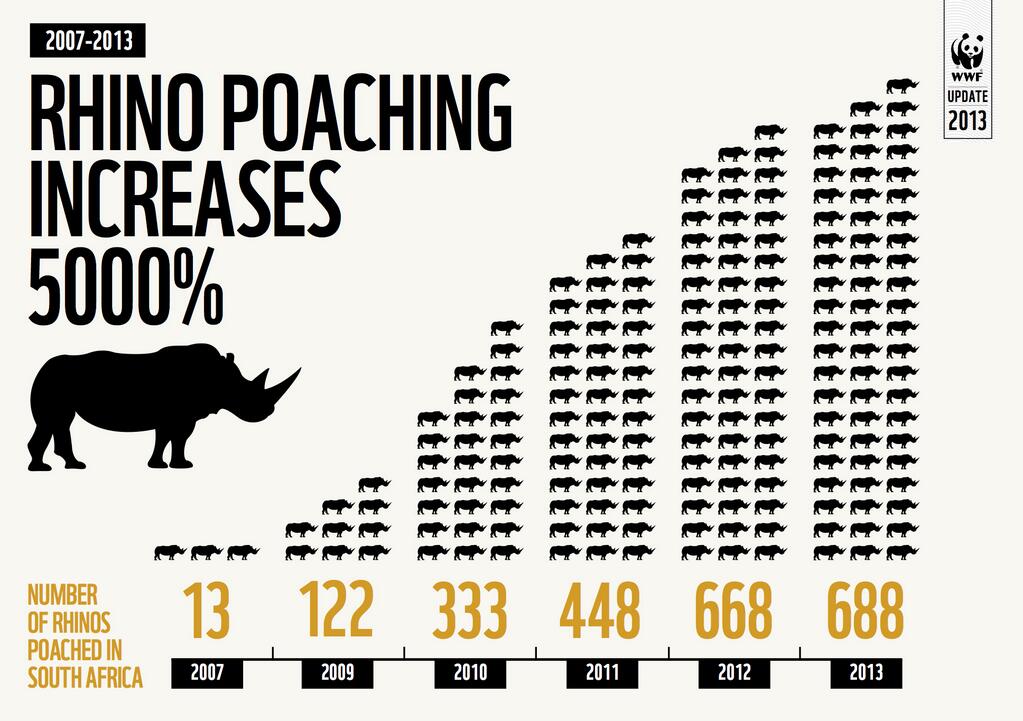
2013 marked some losses for us all...


On the 11th May 2013, poachers raided an elephant sanctuary and killed at least 26 elephants. for the full story click here
Image source

Image source

In an article entitled Top 10 Hotspots, it was shown that between August 2012 and July 2013 deforestation increased by 28% (still recorded as the second lowest level ever). The image below is taken by google where the green indicate the forest cover and the red shows the forest that has been lost. To see the other google images taken of forests from around the world and their state of deforestation please click here!
Image source

But it also marked some amazing discoveries and event for science and conservation...


Earth Hour hosted by WWF- In 2013 this year, at 8:30pm London Eye, Houses of Parliament, Big Ben and more all switched their lights of for an hour!!
Image source

London Zoo's Streak for Tigers event! Raised a lot of money for global tiger conservation schemes!
 
Image source
Humpback whales may be taken of the  endangered list for 2014 as their numbers are now considered to be viable. Good thing or a bad thing read this and tell us what you think? Humpback whale 

Image source

And in terms of discoveries...

 
There were more than 10 newly found animal species this year including a monkey that purs like a cat!! but our highlight was this cutie called an olinguito. Tell us what you think!! Cute??
image source

       
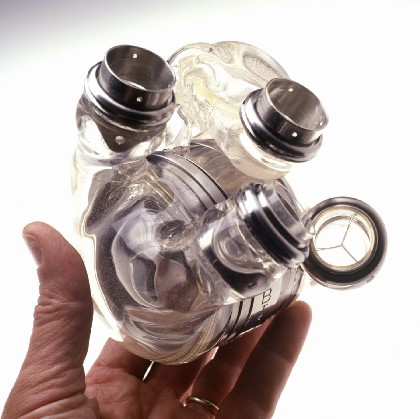
For the first time ever an artificial heart used for people with very weak hearts that are unable to pump blood to sustain life, has saved a patients life. A promising start for future usage!...     
Image source
          
                                          
The genetic default that is linked to the development of Downs syndrome has now been corrected states, this was conducted on isolated cells only and not humans but it is a massive step in further understanding this condition!. 
Image source
                     
And that marks the end of our last post for 2013 (short and sweet we would love to go on though)!!! We hope you have enjoyed this year as much as we have and we have an awesome feeling that 2014 will be a great year for science! We hope you have an EPIC New Years and we want to thank you for being so loyal to our blog we really appreciate everything! 
HAPPY NEW YEARS!!!   
Biobunch, 
Over and out.                                             


Greetings,
So we are nearing the end of Mighty Waters Week but before it ends we felt that there is one river that we just have to mention or it just wouldn't be right. It is none other than the Amazon River. So firstly we thought we would share with you the top ten ranked rivers by how much water they can carry: 

  1. Amazon
  2. Congo
  3. Orniaco
  4. Yangtze
  5. Parana
  6. Brahmaptura
  7. Yellow
  8. Yenisei
  9. Ganges
  10. Missisipi

The River Nile is by far the longest it is actually one massive tributary, a tributary is a river or a stream that flows into a larger river or lake. The Blue Nile rises in the Ethipian Highlands the Nile is only formed when the White Nile then joins the Blue Nile, it is then emptied into the Mediteranean. Whereas the Ganges and the Brahmaptura arise from the Himalayas (worlds highest mountain range) and then join to form the river Padma, once joined it then exits in to the Bay of Bengal to form the largest delta.

 Now to look into the Amazon River.

This magnificent river is considered to be the Queen of all rivers and how couldn't it be, it carries with it a fifth of the worlds flowing freshwater, meaning that the Amazon river carries the exact amount of water than the next ten biggest rivers combined!! The amazon is the main drainage pipe of South america, it drains a third of South America and it does this through its large river basin. The Amazon tranports billions of sediment ever year, this is visible from space in the form of a brown stain leaking in to the sea. It is a tough location to thrive in with its radical seasonal changes all year round, when it is the dry season the river has a width of 4-5km whereas in a wet season it can dramatically increase to a width of 50km. The Amazon river play a major role in maintaining the ecology of the basin and supporting its habitats (swamps, marshes and streams). 

Within this River are some of the richest waters to date with 3,000 species of fish found already that is already more than the Atlantic Ocean, and thats not all scientists believe that the number could rise to 5,000. The Amazon is an amazing area but life can be challenging with its murky waters at low depths, despite that limiting factor fish have adapted to communicate through electricity, they do this through altering the properties of the electric field around them. One such creature is the electric eel that can deliver a shock of 400v- enough to render a human unconcious. The river is also home to monsrtous fish such as the pirarucu or arapaima which are the largest fish in South America  at a length of 25m. Other habitants include the freshwater dolphins, otter, and the river turtle along with the 6m long green anacondas.
This is the pirarucu, and not even the biggest one!


The pink river dolphin, known locally as the boto can weigh up to 100kg and grow to more than 2.5m. Like other dolphins these river dolphin are highly sociable living in groups of up to 20 individuals. in the breeding season these socials turn to more vicious encounters,  competition to find a female is fierce and male dolphins often come of from a fight with serious bites inflicted. That being said it isn't all brute force the males also put on a show for the ladies, they rise out of the surface with rocks in their jaw it is thought they do this to show the female their strength and dexterity.
For these dolphins life couldn't be better they have a consistent supply of food from the migratory fish routes including shoals of the dorado catfish. The Amazon Queen is also home to the tucuxi which are known locally as a river dolphin. The Tucuxi and the Boto are unique in that they are the only freshwater dolphins that are not critically endangered. 

Just to celebrate the rich diversity of life the amazon supports here are some pictures for you!


That concludes our post for today, hope you found it as awesome to read as it was for us to do the research for it!! Make sure to come back tomorrow for our final post!

BioBunch. 
Over and out.


Greetings,
We hope that you have been enjoying this amazing heatwave that all of the UK is experiencing! What have you been up to on these lovely summer days picnics? because we have been enjoying our precious sunbathing minutes. For those of you who do not know it is Mighty Waters Week and in the  spirit of this week and this heatwave we just wanted to remind you that it is so, so important to stay HYDRATED! to make this clear we are not talking about a coke (though we know how tempting one of those are on a hot day) but with actual water. In order to avoid scary things like heat stroke or you know DEATH! keep hydrated.  
Anyways, today’s post isn't about keeping hydrated it is in fact one of the sources of all our bottled water freshwater lakes, why we hear you say? Because when thinking about any type of freshwater system we found that lakes isn’t really the first or second thought in your mind and we hope to change that. So here it goes…
Lets begin with the worlds largest lake shall we? well there’s a problem with that the worlds largest lake is actually saline it is in fact the Caspian Sea… no we didn’t get that wrong, it’s one of those things in science that doesn’t make sense (as there are many) the Caspian Sea is actually a lake not a sea. A lake. And so we rephrase the question to… what is the worlds largest freshwater lake? This title is owned by none other than Lake Superior, how aptly named. Lake Superior is part of the great lakes of North America forming the biggest continuous mass of freshwater on Earth.
Lake Superior covers an area larger then the UK!

Just a few lakes that support amazing wildlife:

Lake Victoria is located in east central Africa along the equator,  it supports 350 species of fish, some of which are thought to be unique to this lake. Many of these fish come from the Cichlid family. 
This is just 1 member of the Cichlid family

As seen by Lake Victoria, Lakes hold the ability to cater to many marine life, and these can be often deadly members of the oceanic world. Lake Nicaragua in Central America is home to one of the worlds deadliest sharks, this lake is home to the big bad bull shark. Bull sharks are known for its temper and aggression, it is also the only specie of its kind that is able to tolerate the changes in salinity from salt-fresh. 
Did you know that it was the Bull Shark that may have been the true inspiration behind the movie hit JAWS.
 Lakes may support a great diversity of animals but other than the nature that they have lakes have plenty of other characteristics that make them amazing, take Lake Tanganyika and Lake Malawi they both have a distinctive feature called a thermocline. A thermocline is a  200m permanent barrier separating the warmer water from the colder water and preventing any mixture of oxygen and nutrients thus creating what is called a bottom dead zone. In Lake Malawi little is able to survive in the dead zone apart from the larvae of a lake fly, these ingeneous creatures have adapted to remain in the oxygen deprived region (the dead zone) in the day thus avoiding predators and once the night takes over they spawn towards the surface.
Interestingly both these lakes are smaller than the one previously mentioned, Lake Tanganyika is 33,000sq km and Lake Malawi is 30,000sq km, thought they are smaller they have been found to harbor a greater diversity of fish, as a cause of the species richness that both Lakes contain they are often seen as diving hotspots!

The Mother Of All Lakes:

The picture above is showing the oldest lake in the world from space. This lake is between 25-30 million years old. This is the Lake Baikal. At Biobunch we love to celebrate the natural marvels of the world whether they be big or small, when reading more about this lake we were amazed at the beauty and the diversity so we were buzzing to share it with you guys to. The lake Baikal is in eastern Siberia and there it is known as the sacred sea it holds a fifth of the our planets surface water. Similar to the stories of other lakes such as that of Tanganyika the Baikal is only where it is due to the movements of  tectonic plates. 
We don’t need to tell you about the severity of a Siberian winter, needless to say, it is harsh with winter temperatures averaging -20 degrees, this plummeting temperature causes the lake to freeze over for more than 5 months. At this point, two ton trucks exploit this 1.2 m thick continuous ice sheet by using it as a highway. 

Underneath this thick layer of ice lies the definition of a winter wonderland, ice sculptures pierce the water and life is found in profusion. The Baikal is isolated and as such this ancient beauty has experienced evolutionary explosions!! It now contains 1200 species of animals, 1000 species of plants, all of which 80% are found nowhere else. Many of the animals found in this lake resemble marine creatures which is strange for a lake (in other words salt water creatures ). Amongst this vast diversification there are 225 species of amphipods that call this lake home, and they play a very important role in maintaining the hygiene of the lake. Baikal proudly holds 40% of the worlds amphipods which resemble shrimp and can often be as big as mice they scavenge on the dead in conditions that decomposition bacteria even find hard to function properly in.

A Freshwater seal...you bluffing:

These seals are smaller than most other seals they grow to 1.2-1.4m in length.

We bluff you not introducing the worlds only freshwater seal! And they happen to only call the Baikal home (just another reason why Lakes are awesome). The Nerpa were  thought to have migrated to the lake 22 million years ago from the Arctic Ocean along rivers that went extinct ages ago. The population is stable at around 50,000. 

Females give birth during the winter in ice lairs. In order to breath they must maintain breathing holes in the ice and they do this by scraping the edges with sharp claws or by gnawing at the ice, as spring finally arrives the ice starts to melt causing the pups to become increasingly exposed to wandering bears and even the odd crow.  

These protruding ice segements from the ice lairs for the Nerpa go give birth in.
 Adult Nerpa like all other seal are amazing divers, they dive down 300m and can remain underwater for at least 70 minutes at a time. The diet constitutes mainly of an oily fish that is only found in Lake Baikal called Golomyanka seriously this is a real thing, they contain about 35% oil and are one of the most commonest fish in the lake. These fish are amazing they are able to cope with the bone breaking pressure 1400m down and if taken out they literally melt (don’t try it though poor strange looking things). 

Two pretty awesome discoveries were made on this lake. One of them was that unlike Lake Tanganyika and Malawi that has a thermocline to sepreate the oxygen out form the bottom layer, Lake Baikal’s water is constantly being mixed meaning that oxygen is always plentiful right at the bottom which means that there are possibly even more animals that have not been spotted yet at the very depths of Lake Baikal. Number two was that at 400m down scientists were amazed to find hydrothermal vents! As you may or may not know these vents are only thought to exist in the deep oceans. Thriving around this vents are small communities of sponges, bacterial mats , snails, fish and even transparent shrimps. 
And that marks the end of this post, if you are interested there are new extreme wildlife expeditions that are being offered to explore the Lake Baikal, we aren't one for the cold but we caught ourselves even considering it... what about you are you tempted to brave a Siberian winter and what would you bring with you? (it should be ok you would only need a really, really big coat and gloves... right?) 

BioBunch.
Over and out.

Greetings everybody, hope your loving mighty water week as much as we are. Today we're going to talk about the two remaining oceans. Enjoy!

Atlantic Ocean
Image Source
Atlantic Ocean is the 2nd largest ocean on Earth, smaller and shallower than the Pacific Ocean. It covers 21% of the Earth's surface. It is bounded by the north and south America to west Europe and Africa to the east. Atlantic refers to Atlas of Greek mythology, making the Atlantic the "Sea of Atlas". 


African Manatee (Trichechus senegalensis), also known as a sea cow 
Image Source
Conservation Status: Vulnerable 
Habitat: Coastal waters and rivers of the Atlantic Ocean 
Despite their colossal bulk and cow-like appearance, they are excellently adapted to their aquatic habitat, with a stream-lined, spindle-shaped body and a tail flattened horizontally like a spatula  they are agile swimmers. Sea cow's are mostly herbivores but eat calms, mollusks and fish.


Atlantic Ghost Crab (Ocypode quadrat)
Image Source
Conservation Status: Not yet assessed 
Habitat: Sandy shores of the Atlantic Ocean 
The name "ghost crab" derives from the animals' nocturnality and their pale complexion. Ghost crabs are both predators and scavengers and they feed at night and tend to feed on bean clams, mole crabs, and hatch-lings of loggerhead turtles. In its ecosystem the ghost crab has an important role as a top predator. 


Atlantic lobster (Homarus americanus) also known as the American lobster and king of seafood
Conservation Status: Not yet assessed
Habitat: intertidal areas of the Atlantic Ocean 
These enigmatic creatures can regenerate certain limbs when damaged and engage in long migrations that can last several weeks. They are nocturnal scavengers that eat slow moving invertebrates and detritus on the sea floor. Atlantic lobsters can usually reach about two feet in length by moulting three-four times a year. During this time the lobster is delicate and vulnerable so it seeks a safe spot to hide. Although it can take up to several months for the shell to harden fully the lobster only takes shelter for a few days. 


Pacific Ocean
Image Source
Pacific Ocean is the largest ocean on earth covering more than 30% of the earth's surface.It is larger than all of the land on earth combined, and covers 46% of the Earth's water surface. It is bounded by America, Asia and Australia. 


Image Source. 75% of the volcanoes on earth are located in the Pacific Ocean Basin
Derived from the Latin word "pace" Pacific means "peace". In 1521 a Portuguese explorer named Ferdinand Magellan in called the Pacific Ocean waters "mar pacifico" which means peaceful sea and hence originated the name Pacific Ocean. Most of the islands of the world are found in the pacific ocean, 25,000 islands to be precise.


Pacific Sea Nettle (Chrysaora fuscescens) also known as the west coast sea nettle

 
Conservation Status: Not yet assessed 
Habitat: Coastal waters of the East Pacific  
They possess a golden brown bell and pale oral arms and dark red color tentacles. They catch their prey by expanding their tentacles like a large net which is able to attain food as it passes by. However larval and juvenile cancer crabs may attach itself on the sea nettle's mouth-arms, getting off as the jelly comes inshore.


Green Sea Turtle (Chelonia mydas) also known as the green turtle or pacific green turtle
Conservation Status: Endangered
Habitat: Tropical and subtropical seas in the Pacific and Atlantic Oceans
Much like other turtles, green sea turtles migrate long distances between feeding grounds and hatching beaches. Mating occurs every two to four years. Females dig a pit in the sand and fill with a clutch of 100 to 200eggs, conceal the pit and return to the sea. Green turtles are among the largest sea turtles in the world. 


Pacific white-sided dolphin (Lagenorhynchus obliquidens)
Conservation Status: Least Concern
Habitat: Cool and temperate waters of North Pacific Ocean  
These energetic dolphins are strong fast swimmers and while looking pretty. Their backs are black and their sides are pale. They feed on quid and small fishes and can grow to about 8 feet in length. 


While there are hundreds of thousands of known marine life forms, we only chosen a selective number of life forms from each ocean. Additionally there are still many that are yet to be discovered, let's just say we know more about space than we do about the sea.  
We hope you had a good time reading about the oceans, do come back for our final post for mighty water week and of course another segment of Friday facts tomorrow.
 

BioBunch.
Over and out.  


Back to Top