
Greetings everybody!
Hope you all have had an amazing week! Students from around the world you are so close (if not already there) to your summer holidays!
The title of this post is pretty distressing, and I know you must be thinking what could be driving this possible apocalypse. Articles published last week alerted the public to a disease that has the potential of spreading through Europe like wildfire - Prion disease. This weeks post is going to shed some light on this disease that has snuck its way up in the ranks as one of natures deadliest.
The title of this post is pretty distressing, and I know you must be thinking what could be driving this possible apocalypse. Articles published last week alerted the public to a disease that has the potential of spreading through Europe like wildfire - Prion disease. This weeks post is going to shed some light on this disease that has snuck its way up in the ranks as one of natures deadliest.
What is Prion disease?
When it comes to this disease, it is all in the name. Take a look below at how the name Prion came into being.

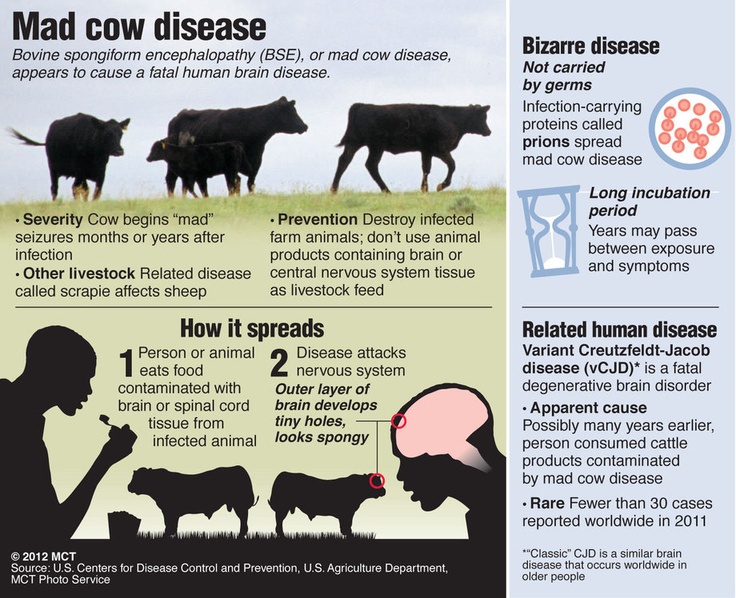
Prion disease is an infection of our bodies proteins. This disease takes responsibility for neurodegenerative diseases known as Transmissible Spongiform Encephalopathies. The term pathogen is used by scientists to describe a disease causing organism. Prion disease is a bit trickier to classify. Prions are infected proteins, therefore they are not alive, similar to viruses that cause diseases such as the flu. Viruses like other pathogens (bacteria and microorganisms) have basic genetic units such as DNA and RNA, Prions however do not.
Common Prion diseases include Chronic Wasting Disease, Bovine Spongiform Encephalopathy and Creutzfeldt-Jakob disease. All these disorders are characterised with the formation of plaques (buildup of mis-folded proteins).
What are Prions?
Prions are a naturally occurring group of proteins found in animals and humans. It all starts with a newly synthesised normal prion protein. Many of these protein structures are carefully formed from a sequence of amino acids that fold and twist to give the shape related to the proteins function. However, if these proteins were to refold to form a new shape their metabolic value would be lost.
When the prion protein changes shape it acts as trigger causing neighbouring healthy proteins to hop on the band wagon and take on a deleterious form of the protein. This continues to form congregations of deformed prion proteins within the infected individuals brain. At this point typical symptoms include weight loss, coordination problems and behavioural changes.
Prions role in European natures apocalypse:

Diseases caused by the development of malformed prion proteins can be extremely contagious and are always develop into fatal brain conditions. Europe had its first confirmed case of Chronic Wasting Disease (a form of Prion disease). On a routine tracking project on reindeer a team of researchers in Norway spotted an individual suffering from an illness and later died. They brought the individual back for examination where it was confirmed that this individual was a victim of a Prion Disease that affects Cervids.
This was officially the first time that Chronic Wasting Disease was ever reported on European soil and the first time to be documented in reindeer. CWD is common in regions such as North America and South Korea affecting the deer and elk in the area. This disease it believed to be transmitted by deformed prion proteins being shed in infected individuals saliva, faeces and urine. This is yet to be confirmed, and with regard to other prion diseases the Centre for Disease Control is unsure whether transmission is caused by physical contact or indirect methods such as food and water sources.
Questions are racing through everybody's minds. Was it an isolated case or has it remained undetected in nature and is far more widespread than we could imagine? Prion diseases such as Chronic Wasting Disease and Bovine Spongiform Encephalopathy (Mad Cow Disease) remain subtle in the initial stages of infection and therefore are easy to miss. If this disease is more widespread than expected Europe's nature is in trouble because once taken hold it is extremely hard to eradicate.
Conclusion...
The UK voted Brexit. We may no longer be part of the European Union but diseases such as the Prion disease or the countless other diseases will not respect our borders. Collaboration is needed now more than ever in the management of future diseases. In regards to the Prion disease if it is more widespread it is likely to eek its way up the food chain reversing all the amazing work the UK and Europe has done to increase its wildlife numbers. Disease management requires lots of information such as transmission is it contagious or infectious? Is there a possibility that it could cross the species barrier and affect humans? This remains unknown and therefore hinders management and detection of the disease in nature.
Well guys that was that! Have an awesome weekend everyone and I will see you next week.
Well guys that was that! Have an awesome weekend everyone and I will see you next week.
Biobunch
Over and out


