Showing posts with label Shark Week. Show all posts
Greetings everybody, 
It is Day 3 of campaign week, meaning only 2 more days of this series and we have a good one lined up for you tomorrow! But all in good time people. 
Today's post is on...
Save our sharks, save our seas.

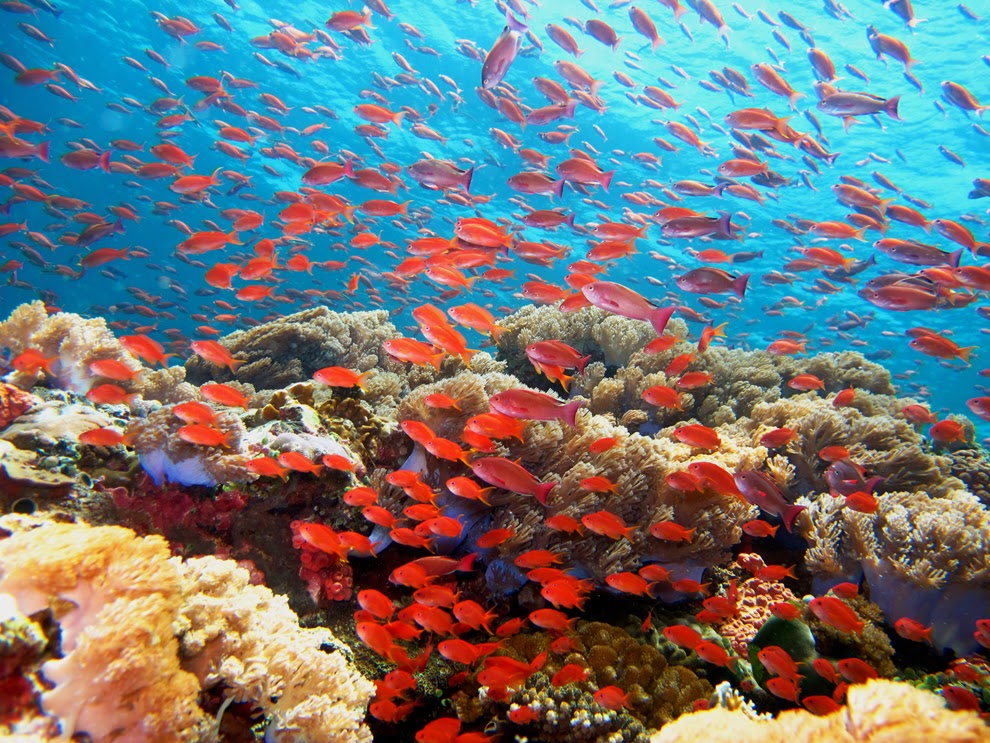
All of us marvel at the elegance and beauty of the submerged underwater world, we often see it for its beauty through the colourful fish that inhabit it and marvel at how little we truly now of this aquatic kingdom. As we sit back and watch our television screens we look in awe at such images like the one below...

http://www.planetdive.com.ph/wp-content/themes/theme1091/images/slide1.jpg


But did you know that you cannot have the above picture, without these?


Yes, sharks. But why we hear you say? Two simple words. Apex predator. Sharks were always guaranteed a seat at the head of the food chain, as very few things eat sharks other than... other sharks. It has been widely studied and there is evidence to support that apex predators such as the shark are crucial for the regulation of the food web structure and the ticking over of ecosystem processes. 

So lets take a look at the campaigns that will help our sharks!

Shark finning: 


Sadly, it does what it says on the tin, shark finning is the process of removing the sharks to pectoral fins and the dorsal fin whilst the shark is still alive, and then is  pushed back  of the boat and left to sink to the bottom of the ocean, left to either starve, drown or be eaten by other fish. 
Take a look at the video below, that goes into how important sharks are to the ecosystem they inhabit.
Caution: some  parts of this video shows a shark having its fin being cut off and maybe distressing for some people. 
Over 73 million sharks a year hare finned for the dish shark fin soup, many have described it to be a tasteless meat but is eaten anyway as it carries a stigma with it. Though it is not seen  a lot China is taking a stand against the shark fin soup. 


In a recent merger featuring some of the biggest names in conservation including the NGO shark savers, WildAid, National Geographic, Nat Geo Wild and WWF- Hong Kong, they launched the campaign...
With hollywood style broadcast messages, billboards, magazine ads and an online recruiting platform  created by Chinas most popular micro blogging platform, it was not surprising that they got the response they did. More than 100 celebrities joined in the first four weeks, 300,00 users pledged not to consume shark fin through an array of media from texting to photos and so on, it got to the point where they gained  2 million subscribers!! The support was amazing and maintained in Singapore and Kuala Lumpur. 
WWF released a leaflet below on the gravity of shark finning: 

What is a Biobunch post without some awesome info graphics and of course only the best for our readers: 


On Biobunch we strive to leave each post we d to end on a good note  and why not with this inspiring story!

This angel is called Maddie Cranston, she is 11 years old and she already hold the titles activist, conservationist and ocean warrior and to top that of she is also an international ambassador for AfriOceans Conservation Alliance. Her path was set in stone when she was 6 years old and watching a movie called 'Oceans', she sat there and watched as she saw the harm and pollution that was inflicted upon our oceans. From this, determination was born, and so was her inner ocean warrior. 

"I may be little, but here's what I know: it is never too early or late to make positive change happen. Even the smallest effort is important. All you need to do is try, every day. Our oceans and planet are worth saving now and for future generations."
- Maddie, Cranston
Check her page out and keep in touch with her, here
This concludes our post today, we hope that you are inspired to stop shark finning and to stop the needless killing of sharks, if not for the sharks, then for every other living organism in our oceans. Have a look at the links below that will tell you how you can help out!. 
It is people and children like Maddie, Cranston that bring home the message what an individual can do! always remember that
because....
“Unless someone like you cares a whole awful lot,
Nothing is going to get better. It's not.”
-Dr Seuss, The Lorax.
 Image source
Thanks, Maddie and Lorax.
Biobunch, 
over and out. 
Greetings everybody, 

First of all we want to say how sorry we are for not posting any new articles on Biobunch for so long!! it has been painful for us to neglect our blog for that long but sadly exam season consumed all of our time. 
But we are back!! and we promise that we are going to try our hardest to deliver to you our loyal Biobunch readers some cutting edge and share worthy articles. 
Lets get on to it then shall we, today is the 12th of June it is officially Biobunch's 1st ANNIVERSARY!!... Yes that means that you guys have been sticking around and reading our articles for an ENTIRE year. In order to celebrate we are going to list our 5 most read articles by you guys, and by the end you will know which one received the most page views.


#5: Shark Week: Megalodon
Image source

Yes! Cast your minds back to what was the epic fail of shark week 2013! Shark week was started with a documentary series on Megalodon, and we took it upon ourselves to educate you guys a little more on this massive prehistoric shark. (If you want to read more click on the above title)

#4: Do you know your moths from your butterflies?

Image source
Do you remember any of the differences discussed in this post? If not and you need a bit of a refresher then click on the title above to check it out. Especially as summer is arriving it would be helpful to be able to identify some of these lovely fluttering creatures in your garden.

  
#3: Friday Facts: Week #4
Image source
There were some really cool facts this week like the fact that Scottish scientists created a pizza that has 30% of your daily recommended nutrients, to refresh your memory on what made it into this weeks Friday facts click on the title.

#2: Weird Moths and Strange Facts
Image source
Above is one of the most amazing looking moths EVER!! This post showed you some of the most weirdest moths that nature has to offer us, such as the Venezuelan Poodle moth. So, check out which ones out of 160,000 species of moth made it into Biobunch's Weird moths. (click on the title above). 


#1: THE BEES NEED YOU! 
image source
Last but most definitely not least is the post that received a staggering 1473 page views was probably one of our favorite posts to write for you guys. In this post we introduced the global pollinator crisis and precisely looked at how bumblebees are in severe danger. And finished off with how you guys can help in your own gardens and your own windowsill. 

Well that was our anniversary post, celebrating the posts that you guys viewed the most. We hope to make this another amazing year for Biobunch so make sure you keep up to date with the latest. 
Biobunch, 
Over and out.    


Greetings everyone,
Carrying on with the theme of enhancing your knowledge on shark biology we bring to you answers to some pretty puzzling shark questions. Starting with...


On the 19th of July 2013 a Mako shark (seen below) was spotted in British waters for the first time in 42 years and in 2012 a great white was spotted 12 miles from Cornwall, how are they able to enter such cold water when sharks usually occupy warmer waters?

Well lets start of by saying that most bony fish (except for tuna) and most sharks are considered to be ectothermic meaning they are unable to warm themselves through their metabolism,  this is the reason why many sharks have to remain in warmer waters. However, the exceptions to this rule are the mackeral sharks, these include your Mako sharks and your Great White Sharks and the common Thresher shark, all of these sharks are considered to be endothermic. But why?
They owe this adaptation to a network of blood capillaries called the rete mirabile, with blood flowing in opposite directions that are able to act as a heat exchanger. In simple terms, heat is transferred to the blood that is flowing back into the body from the gills, whilst the blood that is flowing out now looses less heat to the surroundings. This remarkable adaptation allows for the temperature inside the body to be 5-14 degrees above the temperature of the surrounding water!!
There are three retia areas that are known. 
  1. Swimming muscles
  2. Brain
  3. The intestines in particular the stomach

A sharks skeleton is made out of only cartilage, so if they lack bone marrow how does a shark make red blood cells?

This posed as a huge mystery to all scientists when they realized that a sharks skeleton is made out of cartilage, that was till they found that this job was performed by the spleen. In case it has slipped your mind what a mammals spleen does, a mammals spleen filters out old red blood cells, whereas the spleen in most sharks generates red blood cells. It is found near the reproductive organs. However not all sharks share this red blood cell generator, some species have a special structure called the Leydigs organ, in the species that this occurs in is is usually nestles along the top and bottom of the esophagus. 

Is it true that sharks live cancer free?

No. Sharks are not a cancer free species, they are just very, very unlikely to have a tumor. It was found that of the large quantity of fish tumors held at the Smithsonian only 15 are from elasmobranchs (sharks and rays), and of which only two were malignant. 
Tumors is basically an uncontrolled cellular growth, and in order to support their very high metabolisms they secrete a hormone called angiogenin. Angiogenin causes nearby blood vessels to grow new branches surrounding the tumor thereby securing a transport system that bring by all the nutrient they need and removes all they waste as well. 
Now, sharks are unlikely  to have tumors because they naturally produce a compound that has antagonistic effects of angiogenin. It was conveniently named angiogenin inhibitor, and does just what it says in the title, it inhibits in other words stops the tumor from gaining a nutrient supply, and with no waste removal the tumor begins to 'choke' on its own waste.

Well this marks the end of Shark Week for us here on Biobunch we hope that you gained some new insights into shark behaviour anatomy and physiology, until next time guys this is...
Biobunch
over and out.


Greetings everyone,

Not sure how you guys are feeling about this years shark week, but if we didn't make ourselves clear on the previous post about the Megaladon then let us just say that we are officially OUTRAGED!! We would like it to be noted that Discovery Channel and NatGeoWild have shamed the annual marvel that is shark week. Firstly, shark week is about raising awareness about sharks, creating a deeper understanding about this often misunderstood and misrepresented creature of the deep, informing the public that sharks are not hell bent determined on killing every single human being that ever enters the ocean. Secondly, why is it that every single documentary that is shown shows the sharks behaviour and then leaves it at that, why are they not going into the anatomy of the sharks the biology that drives these amazing animals to do what they do. Instead what we get is the following: When Sharks Attack, followed by When Sharks Attack and ended with When Sharks Attack. Moral to the story viewers, sharks are evil! Well that's the vibe we feel when we watch these documentaries tell us after watching these do you come away with an overpowering urge to HELP SAVE THE SHARKS?! No,  well we don't blame you!.

This lead us to the post we are giving you today, a true dedication to why sharks are awesome! in the next two posts we will mind blow you with some awesome shark biology. Enjoy!

The Lateral Line System:

Ever wondered how sharks are able to pinpoint their prey with deadly accuracy, or how they are able to navigate there way across half the globe, well the simple answer would be their lateral line system. This system is made up of tactile sense organs that are able to detect movement and pressure changes in the surrounding water, in a few words it is able to detect water displacement.
The lateral line system is visible to the naked eye on sharks. They are seen as small skin perforations on the sharks cavity.
Each perforation seen on the shark contains a bunch of mechanorecptors (receptors that receive mechanical stimuli) also known as neuromasts. They lie embedded in mucus filled canals called the lateral line canal, the neuromasts are made up of sensory cells and support cell and as seen in the picture below they are encapsulated within a gelatinous dome, the tubule given the neuromasts direct contact with external stimuli. But how do they use this for prey detection? Well picture this, a seal is swimming thereby displacing the water surrounding it, these waves sweep across the sharks surface and the change in pressure is carried down the tubule and into the lateral line canal. This pressure change causes the gelatinous dome to bend, causing the neuromasts to bend also- thereby triggering an electrical change in the basal body (the individual cells in the neuromasts)  the neurotransmitters pick this change up and the sensory nerve carries this to the brain where it is interpreted and the shark can either choose to move towards it or ignore it.


It doesn't stop there...:

Some of the neuromasts  made up of mechansosensory receptors have become evolutionary modified to become electrorecpetors, this specialised system concentrated mainly around the snout of the shark is called the Ampullae of Lorenzini. With this the shark has enhanced  its ability in detecting indirect touch, as they are now able to detect minute electrical potentials which are generated by muscular contractions. When humans swim for instance they give of a different electrical field compared to that of the surrounding water, which is then carried to the ampullae of lorenzini. It also explains how sharks are able to migrate their way across such large distances, because they are able to detect the earths electromagnetic field. 
A diagram showing the structure of this system. Similar to that of the lateral line system, but is connected straight to the external environment.

Similar to that of the lateral line system you are able to see the perforations with your naked eye!
Well that rounds up today's post on how the Great White Shark uses two of its most interesting sense for prey detection!! For those of you who are craving more information on shark anatomy and can not wait for our awesome post tomorrow have no fear because below you will  find the full documentary of INSIDE NATURES GIANTS: THE GREAT WHITE SHARK! now this is what we call shark week material! Tomorrow we shall be answering some pretty awesome questions on the physiology. Make sure you don't miss out on it!!


Biobunch.
Over and out.


Greetings everybody, Enjoying shark week?! How did you find the opening of shark week on Discovery Channel? We’re referring to the fake Megalodon documentary! Disappointing “documentaries” are being aired on discovery channel leaving many viewers including us speechless. A channel that was highly respected as an educational channel has now become something like SyFy channel. In complete agreement with Will Wheaton as to Discovery Channel owing its viewers an apology.

''Sharks are fascinating, and megalodon was an absolutely incredible creature! Discovery had a chance to get its audience thinking about what the oceans were like when megalodon roamed and hunted in them. It had a chance to even show what could possibly happen if there were something that large and predatory in the ocean today … but Discovery Channel did not do that. In a cynical ploy for ratings, the network deliberately lied to its audience and presented fiction as fact. Discovery Channel betrayed its audience." 

Read his full article here.

But don’t you worry #BioBunch is here for the rescue. We hope you liked our previous post about events that changed the public's perception towards sharks and here’s a post about Megalodon. Enjoy!


Source.  A Megalodon adult shark could have grown over 60 feet and weighed as much as 100 tons which made it an apex predator.
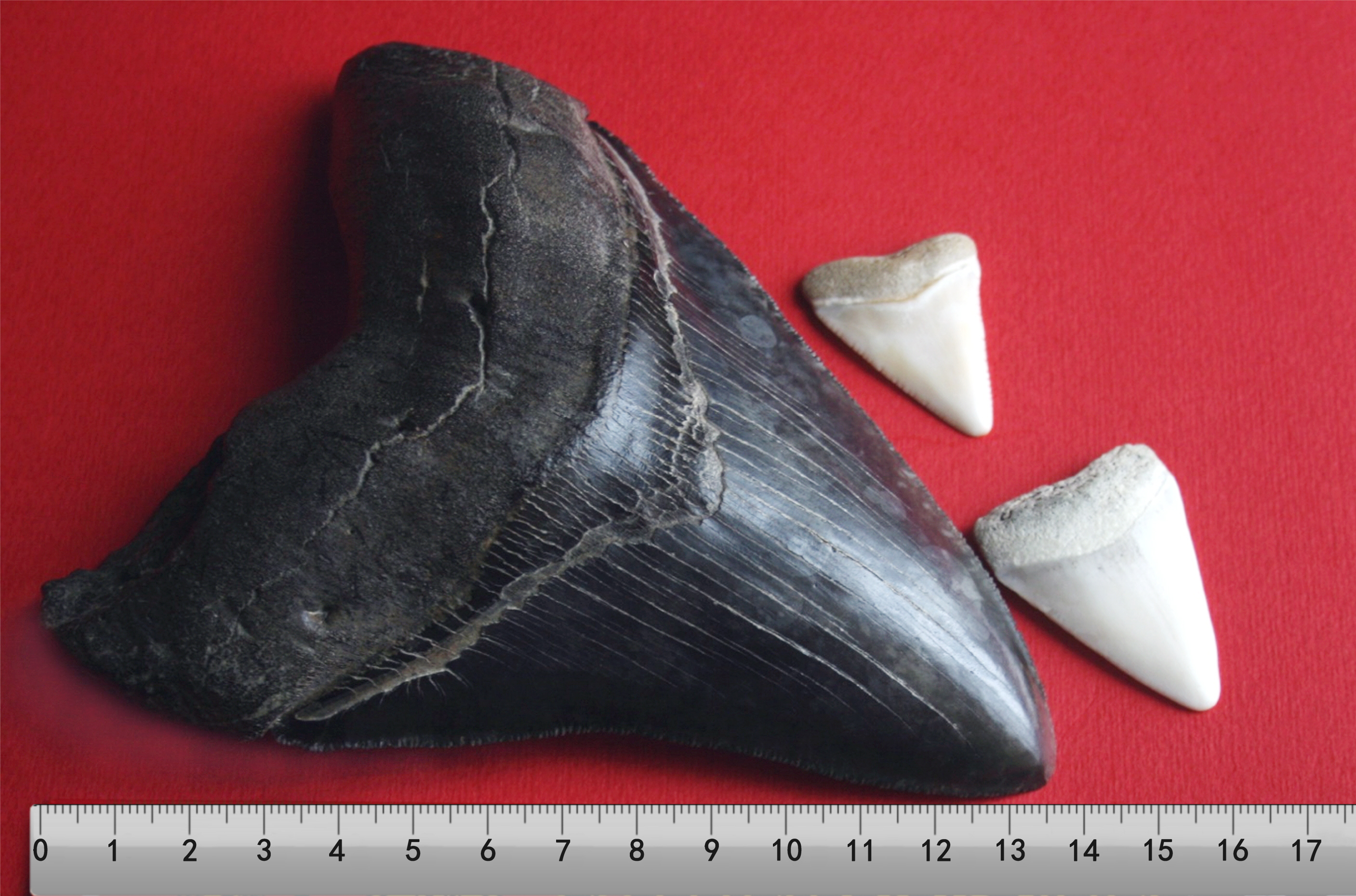
Megalodon (Carcharodon Megalodon) meaning big tooth in Greek is an extinct species of shark that wandered the seas and oceans 28-1.5 million years ago. It was given its name as its teeth were about 7 inches long whereas the biggest teeth of a great white shark are only about three inches long. 

Source. Megalodon's tooth (black) with two great white shark teeth (white)

Megalodon lunched on giant prehistoric whales paralyzing them by biting their fins or damaging delicate organs. Using computer simulations a joint research team from Australia and the U.S determined Megalodon’s biting power. Megalodon’s biting force was equal to 10.8 to 18.2 tons (by comparison the extant cousins the great white sharks chomp with about 1.8 tons force, a Tyrannosaurus Rex chomped with 3.1 ton and a lion with a wimpy 600 pounds), thereby concluding that Megalodon had the most powerful bite of any creature that ever lived. 

The subject of Megalodon extinction still remains under examination and over the years many possible causes for its downturn have been proposed such as oceanic cooling and sea level drops, new competition and a decrease in food supply leading to death by starvation. 

However Michael Sorensen, executive producer of Shark Week said: "95% of the ocean unexplored, who really knows?”
What do you think? Do you think the monster still alive hidden in our unplumbed ocean? 

We'll leave you with a less time consuming and more factual documentary than the one on discovery channel.


#BioBunch.
Over and out.

Back to Top