Showing posts with label world environment day. Show all posts
Greeting everyone, 

Whether it is new years for you guys already or you are still in the Eve of it all we have an entire post based on the most awesome science related events and discoveries we could find from the year of 2013! Enjoy!! 

Lets have a look at the events we got out hands in: 


World Environment Day! 2013: 
It was all about those three words below! and it was an amazing day! Challenge for you guys at home try WWF's 5 Livewell principles as a new years resolution and tell us how you get on! World Environment Day! 
Image source

National Geographics Mighty Water Week 2013! check it out!!... 
Yep we did a post every day for 7 days for this week and it was awesome!
 And Big Cat Week

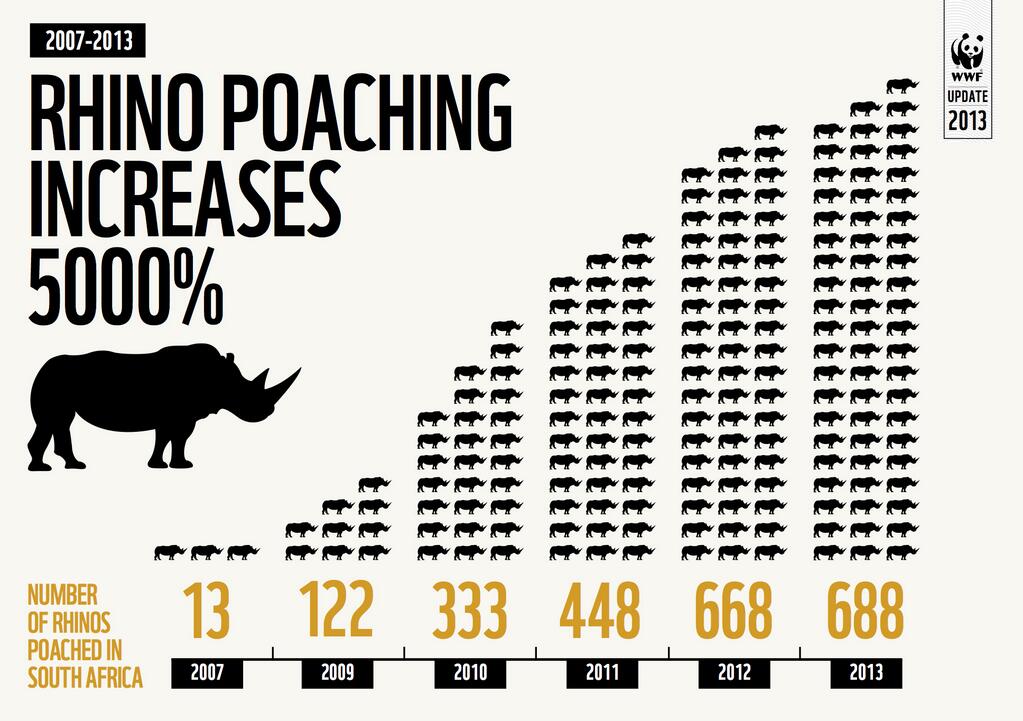
2013 marked some losses for us all...


On the 11th May 2013, poachers raided an elephant sanctuary and killed at least 26 elephants. for the full story click here
Image source

Image source

In an article entitled Top 10 Hotspots, it was shown that between August 2012 and July 2013 deforestation increased by 28% (still recorded as the second lowest level ever). The image below is taken by google where the green indicate the forest cover and the red shows the forest that has been lost. To see the other google images taken of forests from around the world and their state of deforestation please click here!
Image source

But it also marked some amazing discoveries and event for science and conservation...


Earth Hour hosted by WWF- In 2013 this year, at 8:30pm London Eye, Houses of Parliament, Big Ben and more all switched their lights of for an hour!!
Image source

London Zoo's Streak for Tigers event! Raised a lot of money for global tiger conservation schemes!
 
Image source
Humpback whales may be taken of the  endangered list for 2014 as their numbers are now considered to be viable. Good thing or a bad thing read this and tell us what you think? Humpback whale 

Image source

And in terms of discoveries...

 
There were more than 10 newly found animal species this year including a monkey that purs like a cat!! but our highlight was this cutie called an olinguito. Tell us what you think!! Cute??
image source

       
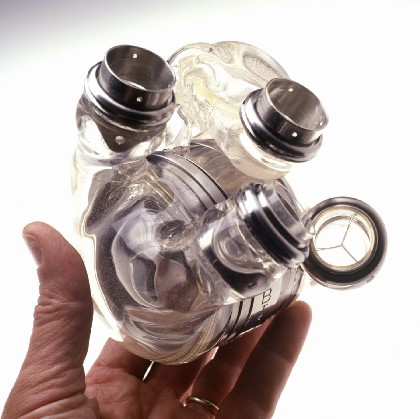
For the first time ever an artificial heart used for people with very weak hearts that are unable to pump blood to sustain life, has saved a patients life. A promising start for future usage!...     
Image source
          
                                          
The genetic default that is linked to the development of Downs syndrome has now been corrected states, this was conducted on isolated cells only and not humans but it is a massive step in further understanding this condition!. 
Image source
                     
And that marks the end of our last post for 2013 (short and sweet we would love to go on though)!!! We hope you have enjoyed this year as much as we have and we have an awesome feeling that 2014 will be a great year for science! We hope you have an EPIC New Years and we want to thank you for being so loyal to our blog we really appreciate everything! 
HAPPY NEW YEARS!!!   
Biobunch, 
Over and out.                                             


Greetings,
For this weeks article we thought that we would draw your attention to ELECTRIC CARS! You may have heard both car companies and various forms of environmental governments swinging around terms such as ‘we promise that we are investing in green technology’, and these promises will be filled with key words such as ‘higher efficiency, lower emissions, reduce our carbon footprint, environmentally friendly, eco friendly, renewable energy.’ It feels as though the amount of stress put on us to turn to more eco friendly products increase each day. To clear this up we are not belittling switching of that light you don’t need on, or turning of the heating and putting on an extra layer because those efforts help A LOT!, and we do everything we can TO SAVE NATURE AND THE POLAR BEARS, but electric cars being the answer to reducing our emissions… needless to say we are a bit sceptical, so we decided to do some investigating on just how environmentally friendly these cars actually are. Enjoy!


When electric cars are not environmentally friendly:   
Whether a car is environmentally friendly or not comes down to 2 major concerns:
1. How the electric vehicle and particularly the batteries are manufactured.
2. How the electricity, which powers them, is generated.

Based on these concerns it was found that in some circumstances electric cars have a greater impact on global warming than conventional cars. A study conducted in Sweden investigated the production and operation of an electric car driven for 150,000 km through a life cycle analysis. They then compared this to the production and operation of conventional cars. When reading through the study, one of the take home findings was that the energy intensive manufacturing of electric cars meant that some of them make almost double the impact on global warming as conventional cars. This was down to the amount of raw materials and energy needed to build the lithium ion batteries.
Hang on a minute there, the challenges on how environmentally friendly these vehicles are when they have hit the road, is still dependent on how the electricity used to charge the battery is generated within the country.


Well our fellow Biobunchers!! Firstly it is important that you are aware of the fact that electricity generated from the burning of coal creates the MOST POLLUTION out of all the other fossil fuels!! And it just so happens that China depends on coal for not a bit but ALL of its energy needs, this drastically reduces the environmental advantage of electric cars driven in China. The life cycle analysis of electric cars  driven in China showed that, they are polluting the atmosphere far more than a conventional car! (just to remind you, this is the exact opposite of what it is meant to do L #sad WHY CHINA WHY??) Anyway… unlike China, Norway seems to be sporting the idea of electric cars, and this is all because most of their power is generated by hydroelectricity. Meaning that their life cycle analysis showed that electric cars driven in their country quickly out performed conventional cars in terms of their environmental impact!

Now, according to Majeau Betlee when the European average generation mix is met, and the your environmental car has been driven for 150,000 km there is a possible 25% improvement on the release of emissions. Sadly the UK does not abide by the European average generation mix . Our energy mix is more coal and natural gas based, so the benefits would be around 10% better over it’s life cycle than a car that has an internal combustion engine. Just to give you an idea on the numbers behind our energy mix: gas (45%), coal (28%) nuclear (17%) and renewable sources (6.6%) compared to the 70% of renewable sources of energy used by other EU countries such as Austria.

All in all, the energy used by the country and their energy mix ultimately decides whether an electric car can be classified as an environmental car. The UK must lower their dependency on non-renewable sources of energy and increase their renewable mix if we are to ever meet our target for the year 2050.
 
So… electric cars are not environmental? 
Well it is safe to say that under the current energy mix exhibited by the UK and mainly China, that green cars are not massively beneficial to our environment. However, there is still hope, by 2020 it is thought that the UK will be increasing the amount of electricity generated by nuclear power stations to 11%, that and the government are placing considerable interest and investment in clean sources of energy.


Now, when one is talking about the environmental impact of conventional combustion engines they talk about that cars tail pipe emission. Surprisingly, when the tail pipe emissions of an electric car are compared to a conventional car, the value is a very surprising big fat. ZERO. Yep you read that right, this means that an electric car emits 100% less through its tail pipe than an internal combustion engine (we here at BioBunch believe that is a pretty big advantage.) It is important to note that the manufacturing process behind the environmental car may not be the best at present, however if there was more of a demand the process would become progressively more efficient. 
It does not end there, of the energy you put into an electric car around 80-90% is converted to useful power at the wheels, compared to a minor 20-30% conversion rate in an conventional car.
CALLING TO ALL LONDONERS!! Have you ever walked through London and thought ‘Is it just me or do we live in an area of really poor air quality’… well to be honest your not far off it, and it isn’t just you. It was found that London is in breach of EU standards on dangerous particles, which are responsible for 4,300 deaths a year! Yeah... that doesn’t sound all too great, but guess what, if more people drove electric cars than the quality of air has a chance to improve all by itself. Interesting how nature has a knack for healing itself without the intervention of humans.
 
And here are a few advantages of electric cars also:
·       Better gas mileage.
·       Less dependency on foreign oils.
·       Reduced exhaust emissions.
·       Saves drivers money.
All in all, we hope to leave you Biobunchers with more knowledge on this advancing piece of technology and the part that electric cars play in both decreasing emissions and reducing climate change. Remember we focused on electric cars in general and not on other cars like hybrids, hydrogen fuel cars and so on. We believe that the effectiveness of environmental cars is based on the countries individual energy mix, however we also take note of the fact that improving a countries transport and decreasing their dependency on buying individual cars has a place in reducing carbon emissions also.

As always guys we are really interested in what you have to say! Do you think that environmental cars have a place in reducing global emissions? Maybe you can think of a solution that hasn’t been mentioned in our article this week? Make sure to leave a comment and keep a look out for more articles!!

BioBunch.
Over and out. 


For all the information used in this text and more visit theses websites:
The Guardian - Carbon confusion 

Benefits of Green Eco-Friendly Cars


This event was plastered all over twitter, and all over the UNEP (United Nations Environment Programme) website on the 5th of June. This day took place on a global scale and therefore was quite a big deal for all of you that have a passion for the environment. Not ringing a bell? Maybe you weren’t aware of this day or maybe you were and you accidentally forgot about it? HAVE NO FEAR BioBunch have you covered!, in this article we will tell you everything you need to know about the outcome of this day.

Firstly what is World Environment Day?
Well technically this event is not limited to a 24-hour time frame and the activities that take place on this day are continued all throughout the year! And then climax on the 5th of June. It began in 1972 and is now thought to be the biggest and most widely celebrated global day for positive environmental action.
On the 5th of June UNEP announced that 2013’s theme would be: Think. Eat. Save. Think before you Eat and help Save the environment. Love Food Hate Waste (a company providing information on this day also) (@LFHW_UK) reported that the amount of food wasted per year in England alone was 7.2 million tonnes! And that 4.4 million tonnes of this could have been eaten. This food wastage causes a loss of £12 billion each year. It is worrying to know that this much food a year is wasted in England alone when 20,000 children under the age of 5 die each day from hunger in developing countries. In retaliation to this disparity the campaign Think. Eat. Save. was designed to encourage awareness of the link between food choices and our environment, and allow all of us to make informed decisions on the food that we eat.

It was found that global food production takes up 25% of habitable land, responsible for 70% of freshwater consumption, 80% of deforestation and 30% of greenhouse gases. All in all, food production is one of the main drivers behind loss of biodiversity and land use change. It is clear that the world is on a tipping point in which air pollution and water usage needs to be improved, the levels of production must be balanced and wastage must be reduced.  It would seem that sustainable consumption must be adopted globally. Sustainable consumption is in a nut shell “doing more and better with less” – so decreasing greenhouse gases, reducing the amount of resources used and reducing degradation whilst increasing the quality of life for everyone
We know what your thinking ‘what can I do to make this years theme of Think. Eat. Save. more successful in saving the planet. Well you’ll be happy to know that you can make a huge difference by adopting WWF’s 5 live well principles:
1. I’ll eat more plants.
2. I’ll waste less food (30% of food brought is thrown out)
3. I’ll eat less meat (for you carnivores, try having like a vegetarian day once a week that will really matter)
4. I’ll eat less processed food, remember processed food is a lot more resource intensive in order to produce the high amounts of fat, sugar and salt
5. I’ll eat certified- MSC for fish, RSPCO for palm oil and RSPCA freedom food for meat and eggs
.
Below are some of the posters from World Environment Day check it out!!

What are you going to do for the Think. Eat. Save. campaign? Give 1 or 2 of the 5 Livewell principles a go, or if you can do all 5 of them!! Let us know how your getting on, or what your going to do for the 2013 campaign by leaving a comment down below. (Side note: those of you who are fans of Ian Somerhalder he did a Q&A session with UNEP to see it click here. 

For more information on World Environment Day visit any of these websites:
United Nations Environment Program

Love Food Hate Waste  
WWF - Footprint in seven facts


Biobunch
over and out.
Back to Top